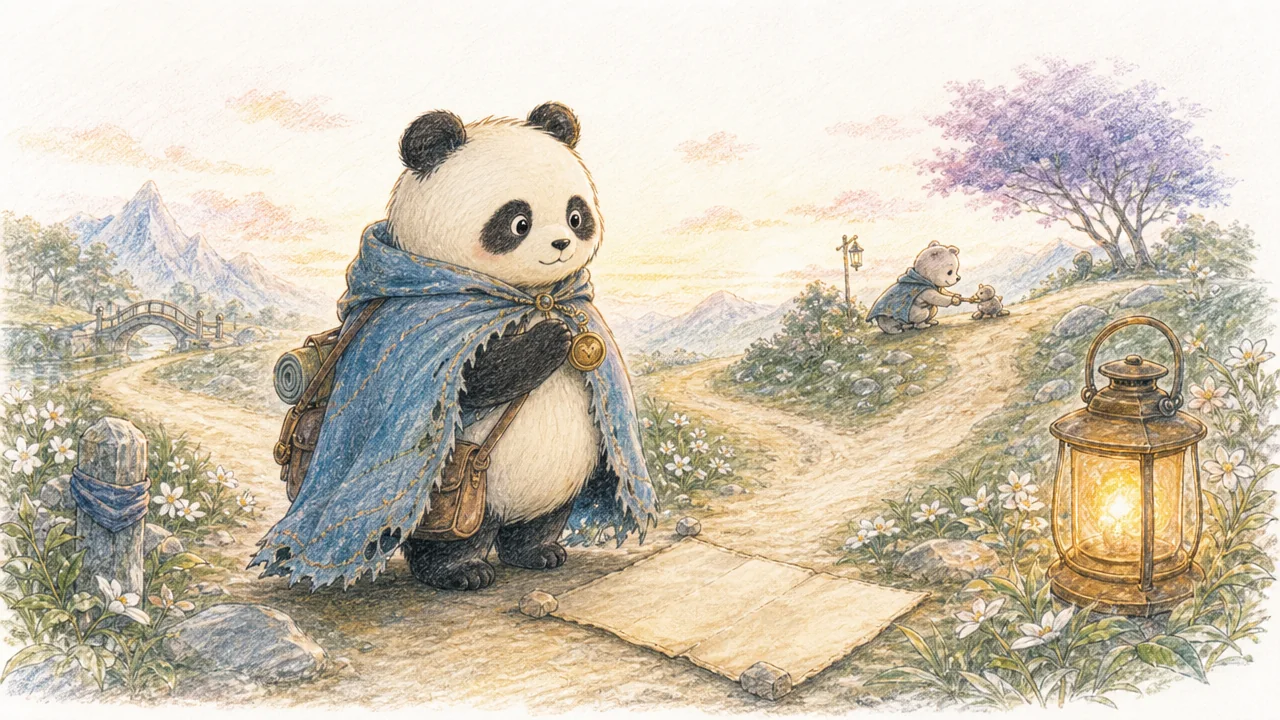
Contains light spoilers for Himmel’s role, the story’s opening premise, and the theme of influence passed from Himmel to Frieren and Fern. It avoids detailed plot revelations.
In Japanese fan discussions of Frieren: Beyond Journey’s End, one expression appears in both sincere praise and deliberately silly jokes: 「勇者ヒンメルならそうした」—roughly, “The Hero Himmel would have done it.” Japanese media sometimes call this pattern 「ヒンメル理論」 or 「ヒンメル構文」, meaning the “Himmel theory” or “Himmel sentence pattern.”
It is tempting to treat the phrase as a simple character catchphrase. That misses why it travels so well. Fans use it to decide what they should do, to praise someone else’s courage, or to make an ordinary action sound comically heroic. Beneath all three uses is the same idea: Himmel’s example can guide people even when he is no longer there.
The available evidence comes from official material, Japanese anime media, public fan posts, Reddit discussions, meme documentation, and small online examples. These are useful for identifying recurring patterns, but they do not measure how frequently Japanese or overseas fans use the phrase, nor do they represent every fan.
This is why the phrase has become more than a quotation. It compresses one of Frieren’s central questions into a format that works as advice, tribute, and joke: what remains of a person after they are gone?
- The phrase turns Himmel into a decision-making rule
- Why the joke still carries Himmel’s moral weight
- The key context: Himmel is absent, but his influence remains
- In Japan, the meme can praise real-world courage
- The English-language version is sincere, ironic, and more flexible
- From Himmel to Frieren to Fern: a meme about succession
- Why this meme lasts
- Panda’s Note 🐼
The phrase turns Himmel into a decision-making rule
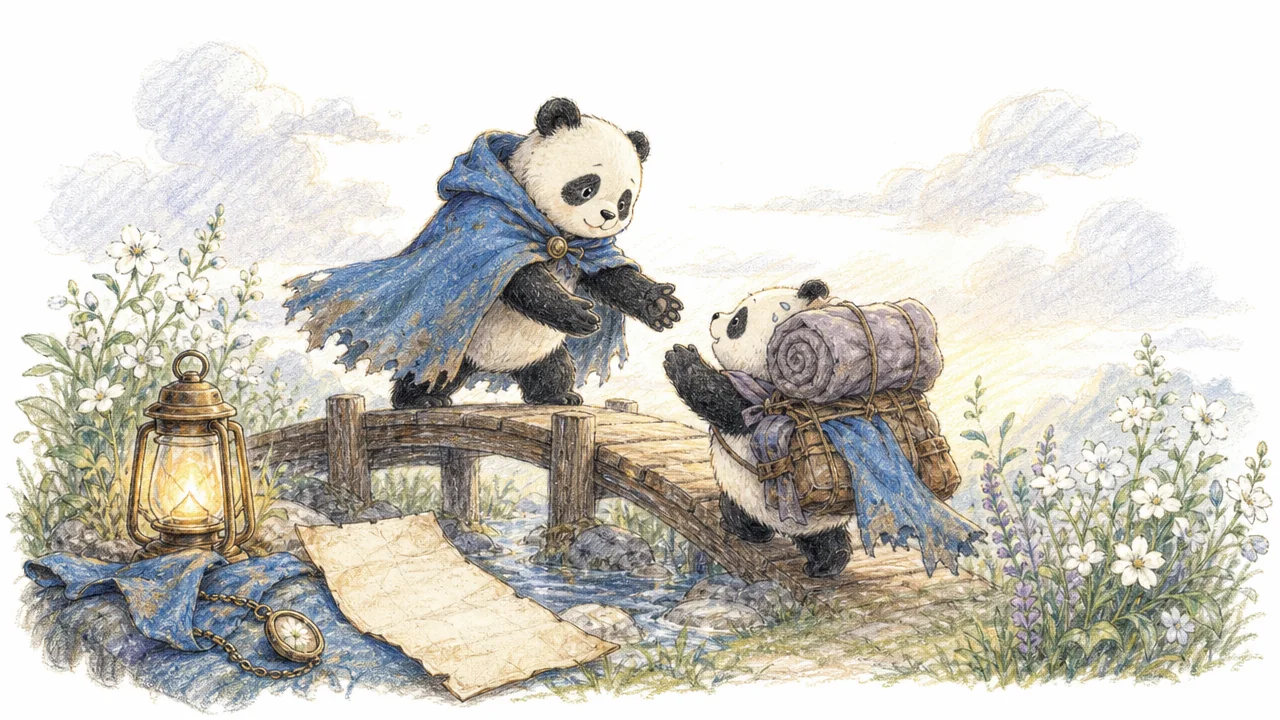
The Japanese expression is often presented not as a line to quote perfectly, but as a way to choose an action. When someone is unsure whether to help, speak up, or take on an inconvenient kindness, “Himmel would have done it” becomes a small push toward action.
That makes the format unusually portable. It can accompany an admirable act, such as helping someone in trouble, but it can also be attached to a modest everyday choice. The gap between a legendary hero and an ordinary task is part of the appeal.
Japanese coverage has described the pattern as 「ヒンメル理論」 or 「ヒンメル構文」, emphasizing how the basic structure can be adapted to different situations. Its visibility was also reflected when the phrase received a bronze award in the 2024 Gadget Tsushin Anime Buzzword Awards. That was an online, self-selected indication of visibility—not a survey of Japanese fans or society as a whole.
Why the joke still carries Himmel’s moral weight
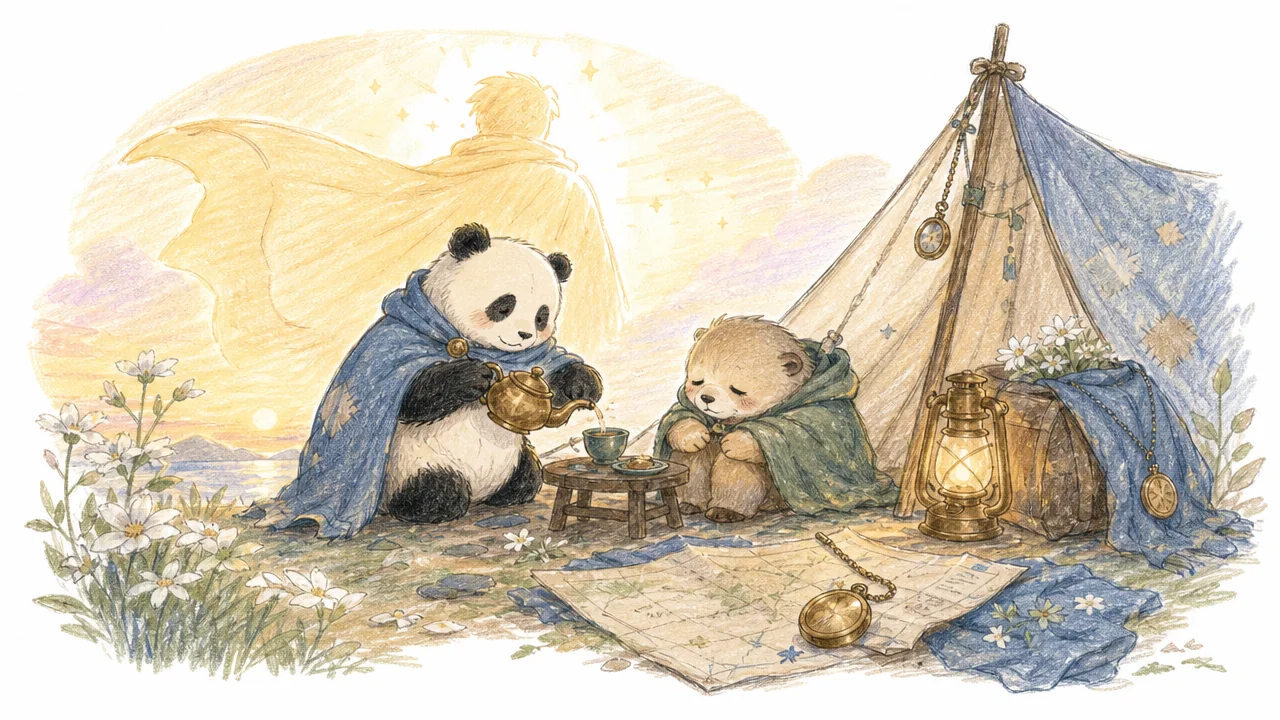
The meme works because Himmel is not remembered only as the warrior who defeated the Demon King. In the official character profile, he is described as caring about his companions, unable to ignore people in need, and deeply influential on Frieren.
That characterization gives the phrase an ethical undertone. Saying “Himmel would have done it” can be a way of encouraging oneself to act kindly without making a grand declaration about one’s own virtue. The fictional hero serves as a reassuring intermediary: perhaps I can take one step in that direction.
At the same time, attaching the phrase to a trivial action creates comic overstatement. Making tea, taking a photograph, or doing something mildly considerate can be framed as if it were a legendary deed. Sincerity and parody therefore share the same sentence pattern. The joke does not necessarily cancel the admiration; often, it depends on it.
The key context: Himmel is absent, but his influence remains
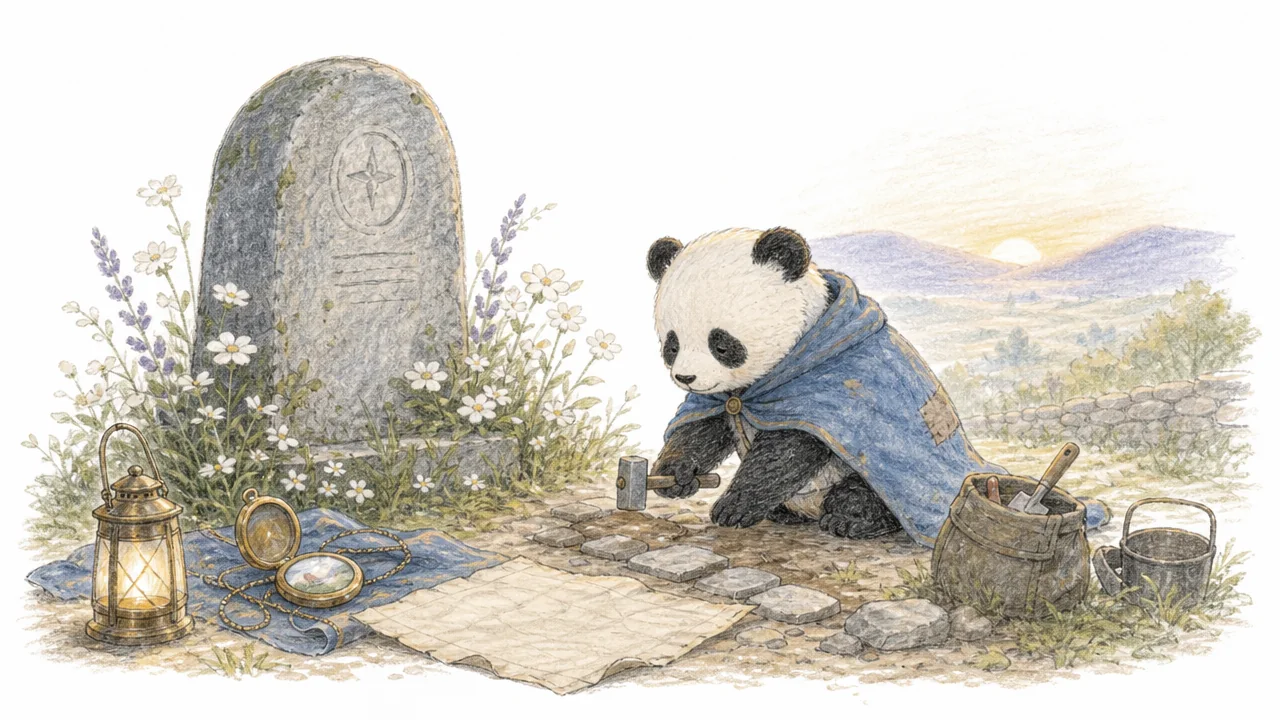
Frieren begins after Himmel and the Hero Party have defeated the Demon King, and after Himmel’s death. Frieren’s later journey is shaped by her belated realization that she did not understand him or the people around her as well as she might have.
The second anime episode makes this structure especially clear. A village statue of Himmel and memories of his past actions connect to what Frieren chooses to do in the present. As the official episode description shows, the story repeatedly turns remembrance into an action rather than leaving it as simple nostalgia.
This is the deeper reason the meme fits the series. Himmel does not need to appear in the scene for his example to matter. Other characters remember what he did, then use that memory to make their own choices. The phrase is therefore a shorthand for a chain of influence: a person’s way of living becomes part of someone else’s behavior.
There is also an important distinction between the meme and the source text. Readers have noted that the exact wording is not repeated constantly throughout the anime or manga. Online repetition can make a phrase feel more omnipresent than it is in the work itself. The meme’s frequency should not be confused with the line’s literal frequency in the story.
In Japan, the meme can praise real-world courage
The expression has also been used outside the fictional setting. Japanese-language coverage connected it with a 2024 incident on Taiwan’s Taichung MRT, where a passenger reportedly quoted a phrase associated with the series. Another Japanese report discussed a Himmel cosplayer who joined firefighting efforts at a shopping mall fire in Vietnam, alongside reactions praising the action as something Himmel would have done.
In these cases, the phrase acts as a compact vocabulary for admiration. Rather than explaining every detail of a person’s courage, fans place the action beside a familiar heroic ideal. The fictional reference becomes a quick way to say that someone behaved with bravery and concern for others.
The limits of this evidence matter. These incidents occurred outside Japan and reached Japanese audiences through news reports, social-media circulation, or online summaries. They are newsworthy individual cases, not evidence that Japanese fans generally respond to real-world events in this way. Still, they show how a fictional character can become a frame for evaluating real behavior.
The English-language version is sincere, ironic, and more flexible
English-speaking fans use several naturalized versions, including “That’s what Himmel would have done,” “Himmel would have done that,” and “What would Himmel do?” Unlike a single fixed quotation, the English meme shifts comfortably between these forms.
Public Reddit discussions show fans applying the phrase to ordinary kindness: doing chores for a partner, supporting someone, or choosing patience. Other posts use it as a reaction template for actions that are only loosely heroic—or not heroic at all. The humor comes from invoking Himmel as an unquestionable moral authority and then stretching the comparison far beyond its original scale.
The phrase has also appeared in travel-oriented meme coverage, where fans use Himmel as an imagined reason to visit beautiful or historic places and make memories. That adaptation fits Frieren’s interest in journeys and remembrance, while also turning the reference into a participatory caption.
The overseas sample is similarly limited: it consists mainly of public Reddit posts, Know Your Meme documentation, and English-language entertainment coverage. It can identify recurring uses, but it cannot establish a precise contrast with Japan. No equivalent Japanese- and English-language corpus was collected for a frequency comparison.
From Himmel to Frieren to Fern: a meme about succession
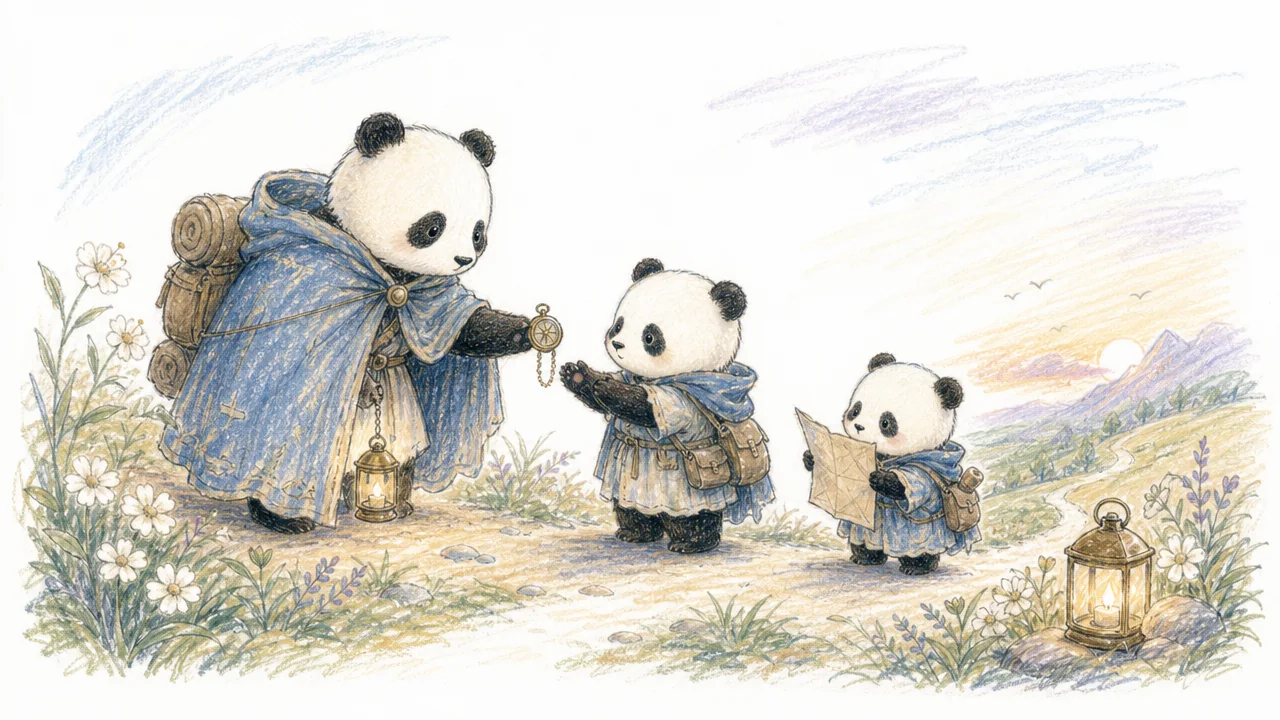
The phrase’s emotional force becomes clearer when Himmel is understood as an ideal rather than merely a beloved character. Fans often discuss him as someone whose greatest achievement was not only defeating an enemy, but changing the people who survived him.
That interpretation supports a recurring fandom idea: Himmel’s example influences Frieren, and Frieren’s changed behavior can influence Fern. In later-story discussions, fans have connected formulations such as “what Frieren would do” with the same inheritance of compassion. This section of the fandom conversation may involve later-season or manga material, so viewers should approach it according to their spoiler tolerance.
English-language fans even joke by asking, “Who was Himmel’s Himmel?” The question is funny because it recursively applies the same logic to Himmel—but it also points toward mentorship and inherited values. If every moral example comes from another person, then heroism is not a pose performed alone. It is something passed on.
That is why “Himmel would have done it” can carry grief, humor, and self-discipline at once. The phrase remembers someone who is gone, turns memory into a present choice, and leaves room to laugh at the grandness of the comparison. It is not simply saying that Himmel was cool. It is asking what part of his example can be continued now.
Why this meme lasts
Many character memes depend on recognition: a familiar face, a repeated line, or an easily copied image. The Himmel formula has an additional layer. It gives fans a ready-made way to translate admiration into behavior.
Its flexibility explains the range of uses. A fan can invoke Himmel while praising a genuinely brave act, encouraging themselves to be considerate, captioning a trip, or joking about an obviously non-heroic decision. The same structure can be respectful and absurd because Himmel’s goodness is strong enough to support both readings.
In Frieren, a person’s legacy is measured less by how loudly they are remembered than by what others do because they remember them. The internet meme strips that idea down to a few words, but it does not erase it. In many uses, it makes the story’s central theme easier to carry into everyday life: someone’s example survives when another person chooses to act.
Panda’s Note 🐼
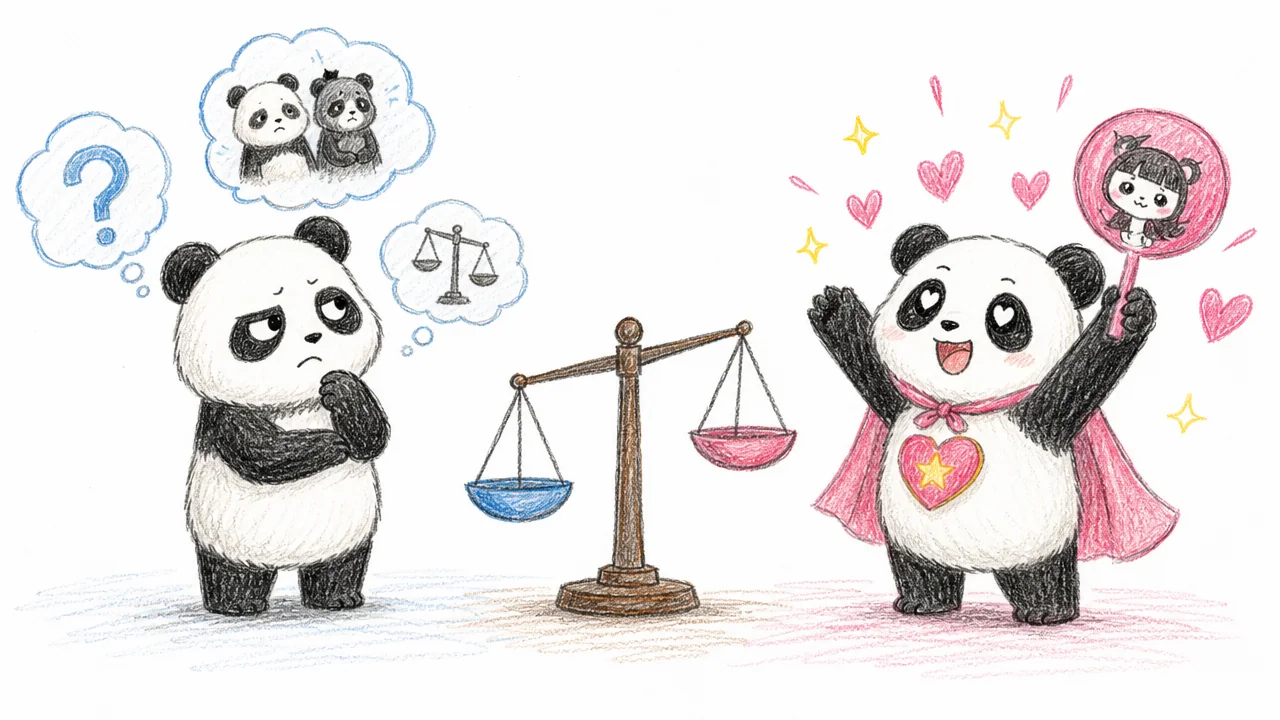
When your country’s fans praise a real act of courage, is there a fictional character or meme phrase they use in a similar way?
Does your fandom have a phrase that can sincerely encourage kindness but also make an ordinary action sound hilariously heroic?
Comments