Minor spoilers for recurring Puff-Puff encounters across several Dragon Quest games.
Ask a Dragon Quest fan about “Puff-Puff” and you may get two very different answers. In Japan, ぱふぱふ is often recognized immediately as one of the series’ familiar bits of mischief. In English-speaking fandom, newcomers may first ask what the word is supposed to mean.
That difference points to the real story. Puff-Puff is not one fixed scene or even one fixed punchline. It is a comic setup: a suggestive offer, a player’s imagination, and an eventual reveal that may be harmless, absurd, or simply different from what was implied.
The joke has appeared since the original 1986 Dragon Quest. Its longevity comes from the way each game can change the details while preserving the expectation that a new Dragon Quest should have its own version.
- In Japan, Puff-Puff works as a familiar series ritual
- The main joke is the fake-out, not the service
- Every new game adds another branch to the joke’s family tree
- English localization has repeatedly changed the surface
- Why English-speaking fans sometimes have to decode the reference
- What Puff-Puff teaches us about localization
- Panda’s Note 🐼
In Japan, Puff-Puff works as a familiar series ritual
Japanese fan-facing discussions often describe ぱふぱふ as an お約束—a familiar recurring convention—and sometimes use expressions such as 安心のぱふぱふ, meaning the reassuring presence of a recognizable Puff-Puff gag. The point is not necessarily that every player loves the scene. Rather, its appearance signals that the game still feels like Dragon Quest.
On the official Dragon Quest X community forum, fans connected the gag with the series’ らしさ, or distinctive Dragon Quest character. A Japanese player blog likewise framed it as something dependable. These are small, self-selected samples from people who chose to post or write about the subject, not a representative survey of Japanese players.
The reference has also become participatory franchise language. An official Dragon Quest Walk campaign used a partially censored form of the word, ぱふぱ〇, inviting fans to recognize the joke without spelling it out. That kind of playful omission only works because the reference is already familiar to its intended audience.
The main joke is the fake-out, not the service
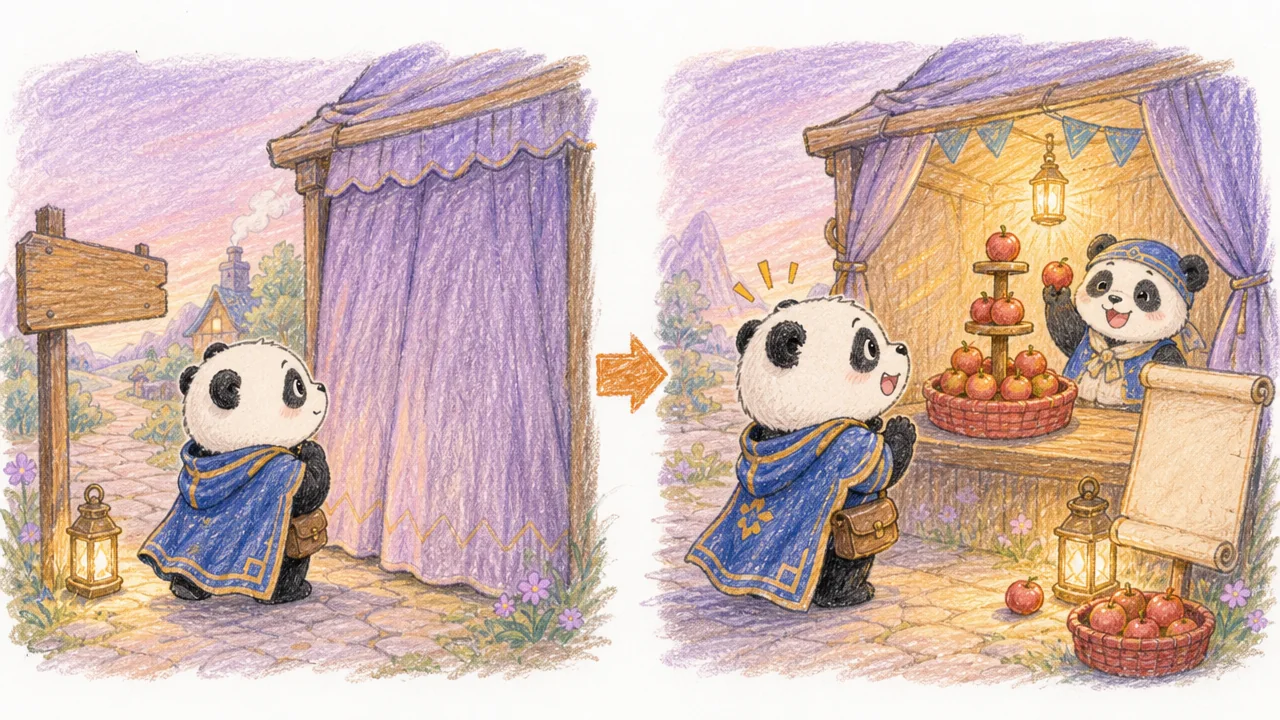
A typical Puff-Puff encounter begins by encouraging an adult interpretation. A woman asks for money and offers a service whose name and context leave room for imagination. The game may then cut away, stay deliberately vague, or reveal something completely harmless.
Japanese commentary often describes this as a long-running ぱふぱふスカし芸—a Puff-Puff fake-out tradition. The variations have included makeup, slime, sheep, and trumpet-like sounds. What matters is the gap between what the player expects and what the game actually delivers.
This is why the gag is better understood as misdirection than as straightforward fan service. Its humor depends on suggestion, silence, and the player filling in the blank. The reveal can be funny precisely because the game refuses to provide the scene the setup seemed to promise.
The structure can also fail. Some fan comments complain when the punchline feels too weak or too much like a letdown. A shoulder-shrugging ending only works if the setup creates a strong enough expectation to overturn.
Every new game adds another branch to the joke’s family tree
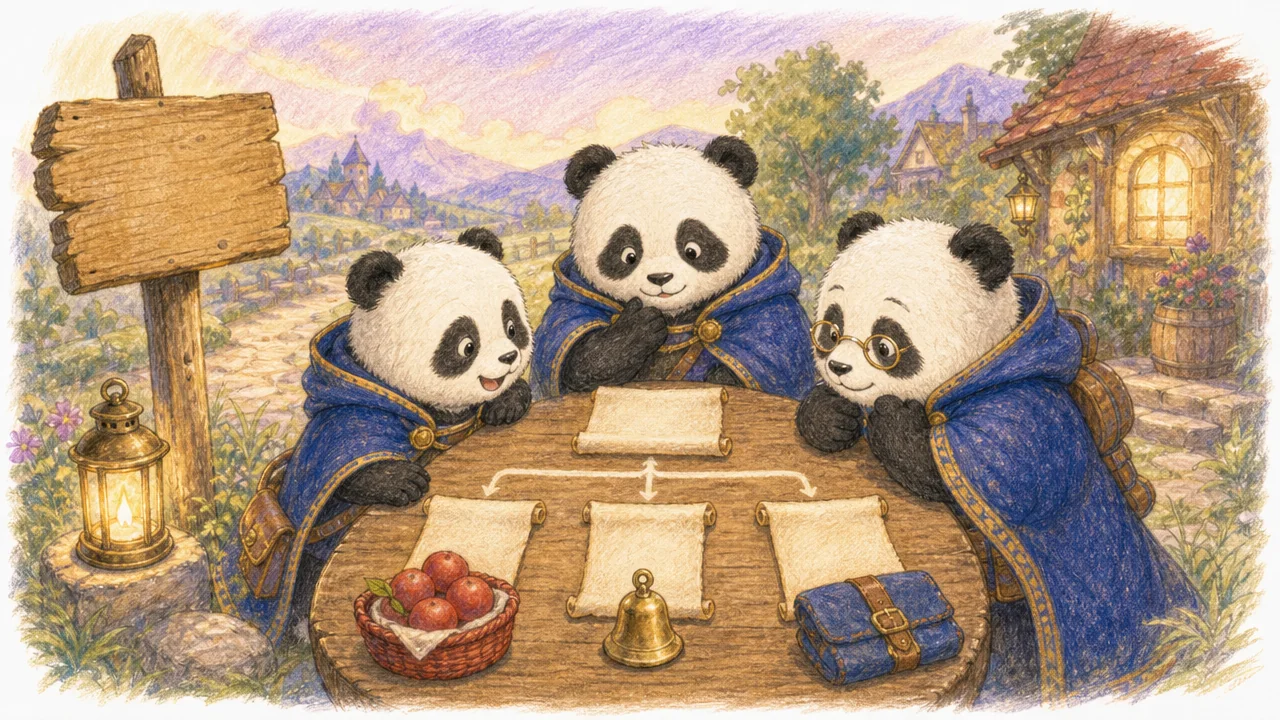
Puff-Puff is a recurring template, not a scene that must be copied word for word. Players look for it in each new installment, then compare the setup and punchline with earlier versions.
A developer interview about Dragon Quest XI explains that the team researched previous Puff-Puff scenes and combined new material with homages to older entries. That makes the gag a small piece of series history: a new version is judged partly by how it remembers the old ones.
This is where the Japanese word itself matters. ぱふぱふ is more than a description of an encounter; it is a franchise signal. Seeing or hearing it can recall earlier Dragon Quest games without any additional explanation. The specific joke may change, but the label carries continuity across generations.
English-speaking fans have a comparable completionist pleasure. Guides treat Puff-Puff encounters as familiar optional moments, and players discuss finding every one or deciding whether to accept them. The ritual exists in both fandoms, even when the cultural meaning of the name is less immediate overseas.
English localization has repeatedly changed the surface
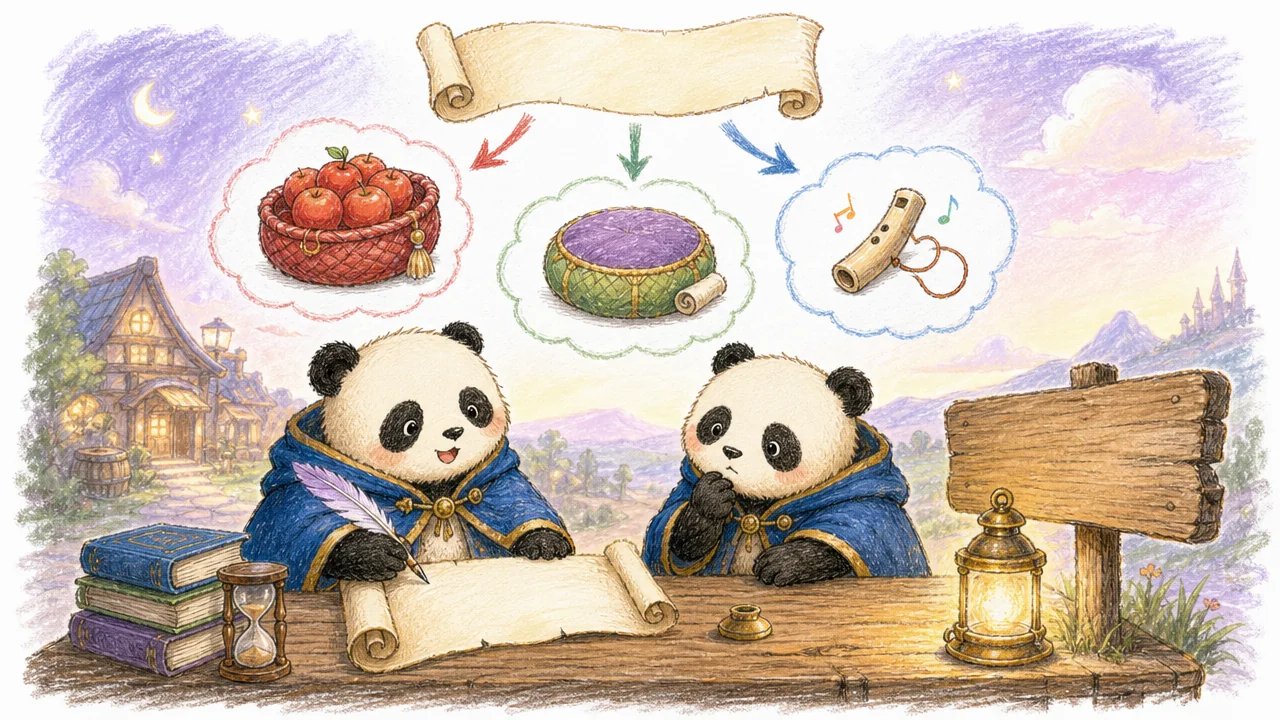
The English history of the joke is not uniform. In the 1989 Dragon Warrior release, the original scene was replaced with a tomato-selling joke. This did not simply erase the suggestive premise; it moved the innuendo into a different comic situation for an English-language audience.
Later releases have sometimes retained the name “Puff-Puff” while making the surrounding scene more overtly comic, less explicit, or otherwise easier to place within the target game’s tone. A producer has explained that these scenes could affect age ratings, giving localization teams a practical reason to soften them in overseas versions.
That is why comparisons between versions can become part of the fandom conversation. English-speaking players notice alternatives such as massage, pattycake, or other euphemistic approaches and ask whether each one preserves the original joke. The question is not only whether the words match. It is whether the player still experiences an enticing suggestion followed by a comic reversal.
A useful comparison is the broader localization philosophy discussed by Nintendo’s Dragon Quest VII localization staff, who described playful adaptation—including dialect and voice—as part of bringing the game’s humor into English. Puff-Puff belongs to the same problem: sometimes preserving the function of a joke requires changing its imagery.
Why English-speaking fans sometimes have to decode the reference
For a Japanese player, the word ぱふぱふ can arrive with built-in franchise history. For an English-speaking newcomer, “Puff-Puff” may be an unexplained phrase that raises more questions than it answers. Fan discussions include guesses about massage, motorboating, or a deliberately vague adult joke before experienced players explain the recurring fake-out.
That uncertainty produces its own kind of fandom. Some players seek out every encounter; others turn the repeated yes-or-no choice into a joke about self-control. “No Puff November,” for example, appears as fan language in a sampled Reddit discussion, but it should be treated as a localized internet joke from that community—not as a broadly established English-language tradition.
The contrast is revealing. Japanese fans can react to the presence of the gag as proof of continuity, while overseas fans may first react to the mystery of the term or to the differences between releases. Both groups can enjoy the reversal, but they do not necessarily arrive at it through the same cultural shortcut.
What Puff-Puff teaches us about localization
Puff-Puff has at least three layers: the suggestive invitation, the player’s private interpretation, and the punchline that overturns it. A fourth layer appears in a long-running series: the memory that this kind of encounter has happened before.
A literal translation may preserve the name but lose the immediate meaning for new players. A replacement joke may make sense locally while weakening the direct link to earlier Japanese releases. Neither choice is automatically more authentic. The important question is which parts of the experience the localization wants to carry across.
That is why the history of Puff-Puff is more interesting than a simple story of censorship. The tomato joke, softened scenes, and retained “Puff-Puff” label represent different attempts to balance innuendo, comedy, age ratings, and franchise continuity. The details change, but the central design remains recognizable: make the player imagine one thing, then reveal another.
For Japanese fandom, the gag’s survival can feel like reassurance that Dragon Quest is still Dragon Quest. For overseas fandom, the changing translations create another layer to compare. In both cases, a tiny joke becomes a record of how a game series remembers itself—and how that memory is rebuilt for another language.
Panda’s Note 🐼
In your country’s game fandom, is there a recurring joke whose exact wording changes across localizations but whose setup-and-punchline structure remains recognizable?
Would you rather a localization preserve a franchise term like “Puff-Puff,” or replace it with a clearer local joke that creates the same kind of surprise?
Comments