Spoilers for Kobeni’s car, several action scenes, and Chainsaw Man popularity-poll results follow.
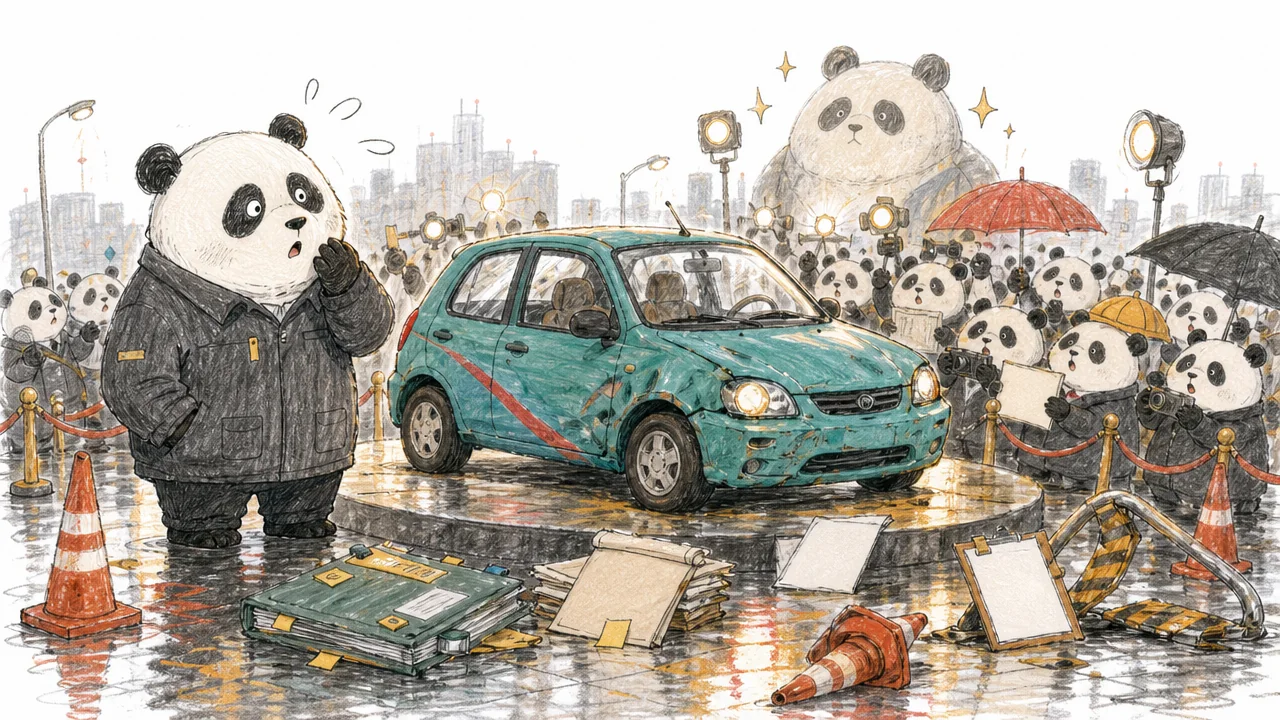
In most character popularity polls, a car would not be a serious contender. In Chainsaw Man, however, Kobeni’s car became one of the poll’s most memorable “characters.”
The first official Japanese poll gave the vehicle 9,878 votes and seventh place. Kobeni Higashiyama herself received 9,580 votes and placed eighth. In other words, Kobeni’s car ranked above Kobeni.
That result was funny enough to become a fandom punchline, but it was not a one-time prank. The car placed 15th in the second Japanese poll and 19th in the third. It also reached fourth place in VIZ’s August 2022 English-language poll, with Kobeni in fifth.
The appeal is not simply that fans love an automobile. The car became a compact symbol of Chainsaw Man’s absurd humor, Kobeni’s terrible luck, and the way fans use popularity polls as another place to perform the series’ chaos.
- The joke begins with the poll’s impossible premise
- Kobeni’s car carries her bad luck with it
- Its plot “feats” made the car a mock action hero
- The poll became a way to participate in Chainsaw Man’s chaos
- Japanese and English-speaking fans emphasize different parts of the same joke
- Why the car joke has lasted
- Panda’s Note 🐼
The joke begins with the poll’s impossible premise
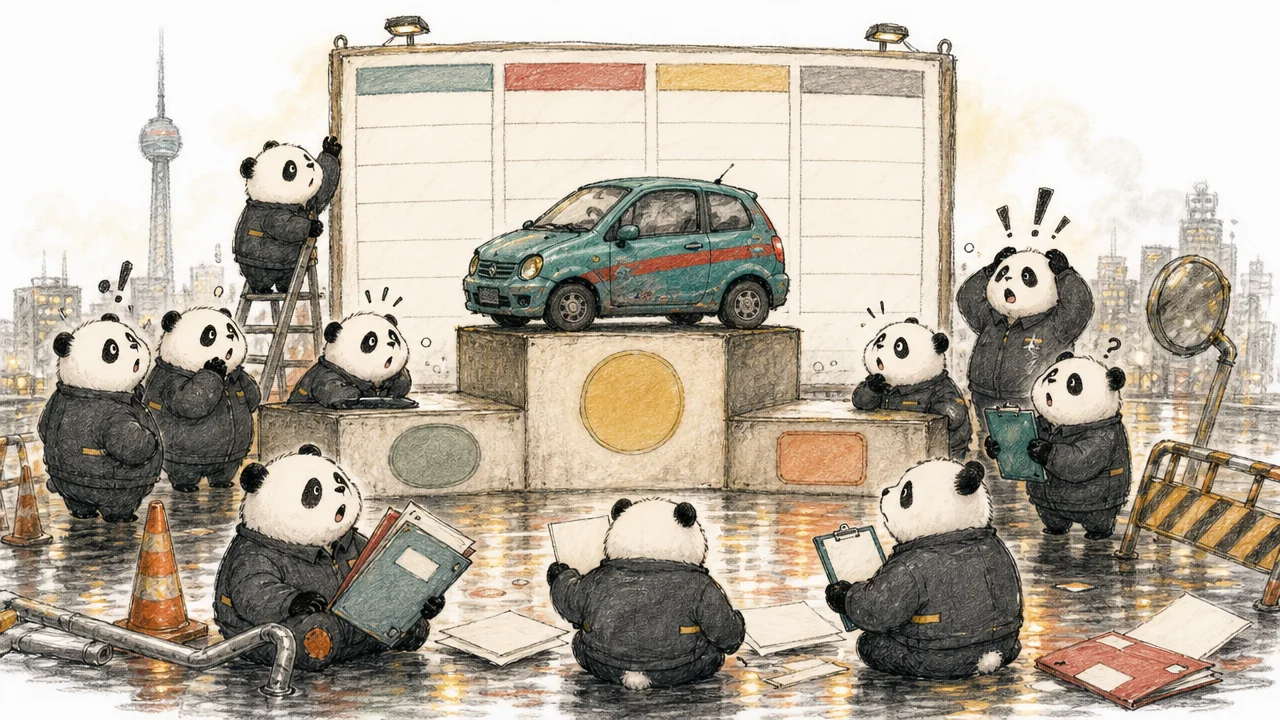
Japanese fan reactions to the first poll often focused on the fact that Kobeni’s car was included as an option at all. Reactions reported around the vote described the choice as funny and the range of candidates as unusually broad. A list that should have measured character popularity suddenly contained a vehicle.
That surprise is important. The humor arrives before anyone even considers the car’s plot history. A serious-looking ranking becomes a joke simply because the candidate list refuses to maintain a normal boundary between “character” and “thing.”
When the car then overtook Kobeni, the result acquired a perfectly repeatable punchline: Kobeni’s car was more popular than Kobeni. The sentence is funny even to someone who knows only the basic premise of the poll.
Kobeni’s car carries her bad luck with it
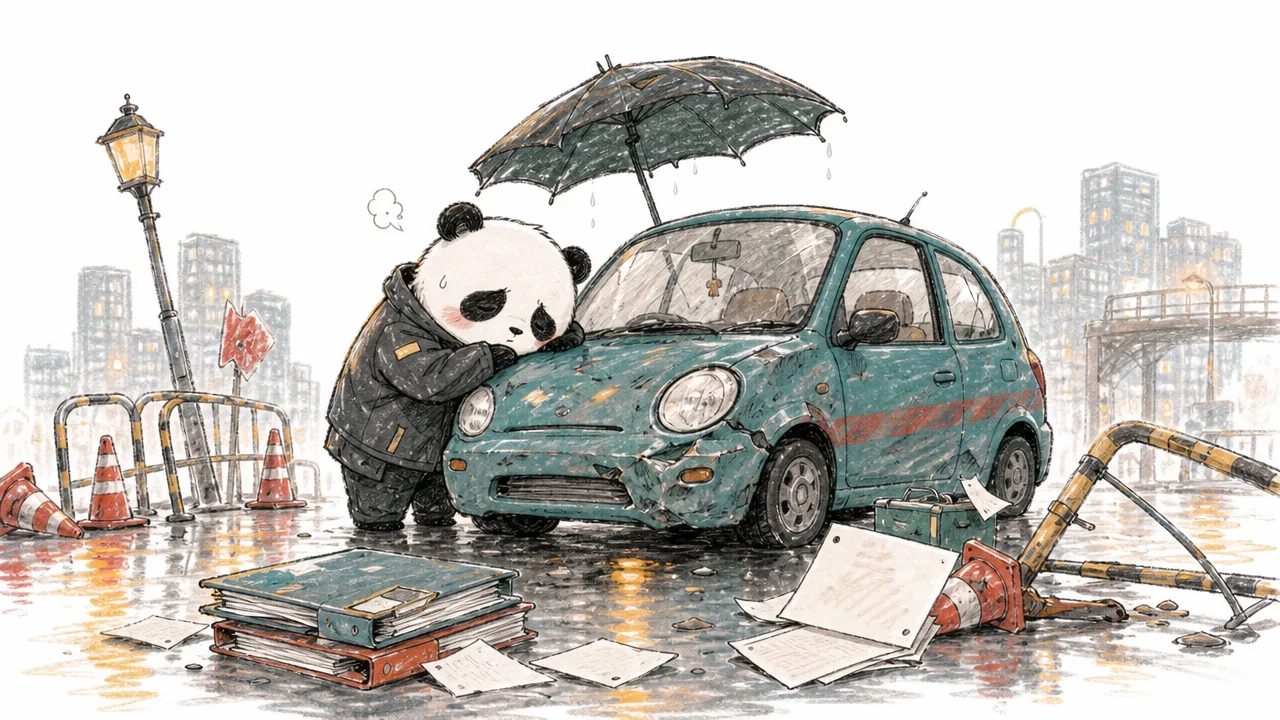
The vehicle is memorable because it is tied to Kobeni’s misfortune. In the story, Power damages the car, and Kobeni becomes entangled in the consequences. The car is not just a prop sitting in the background; it becomes part of the chain of disasters that follows its owner.
That gives the vehicle a kind of emotional association. When fans joke about the car, they are often also recalling Kobeni’s helplessness and the unfair situations she is forced to endure. A Japanese joke along the lines of “vote for the one that got run over too” plays on both the vehicle’s fate and sympathy for Kobeni.
This is why “Kobeni’s car” is more resonant than an arbitrary object from the series. It represents a particularly concentrated form of Kobeni-ness: fragile, unlucky, and somehow still present after everything goes wrong. The attachment is less “this is my favorite car” than “this car suffered alongside Kobeni, so of course it belongs in the story’s tragicomedy.”
Its plot “feats” made the car a mock action hero
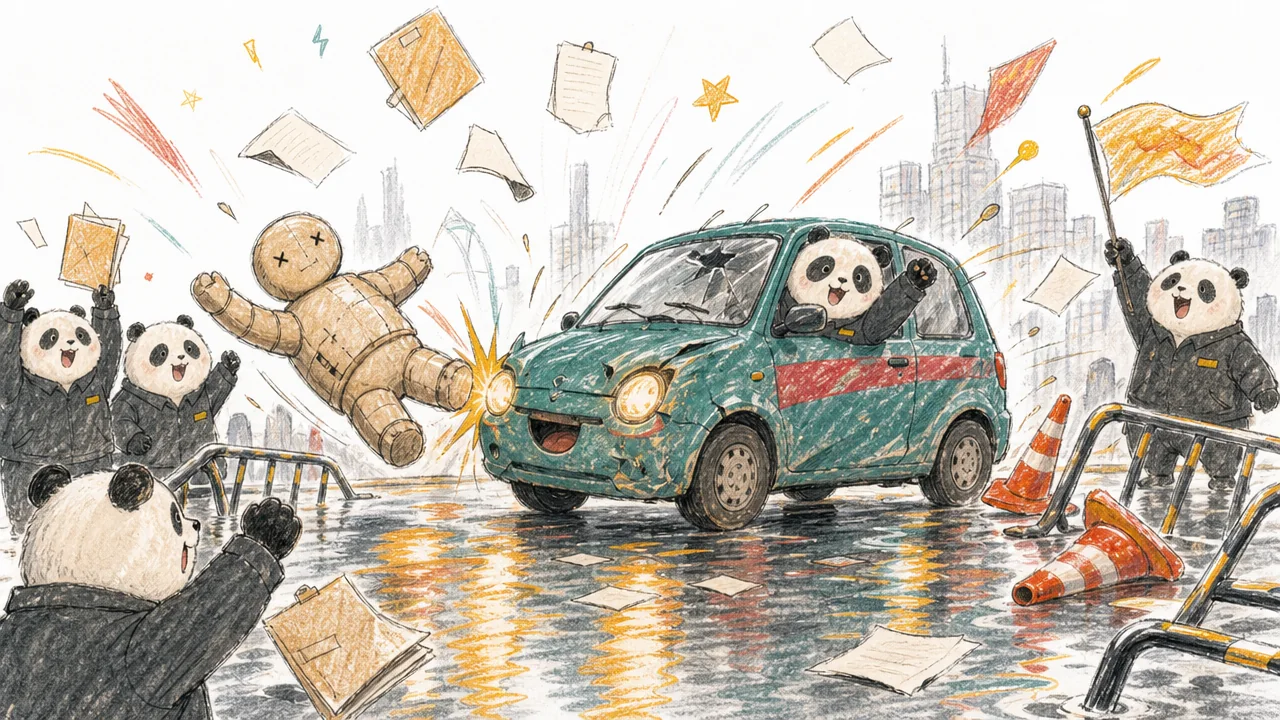
The car also has a résumé. It hits an attacker, helps catch a falling person, and plays an important role during the Santa Claus-related conflict. Those moments give fans material to list as though the vehicle were a battle-tested member of the cast.
The official poll presentation leans into this joke too, using a humorous description that presents the car as a kind of “steel of brutality.” That framing does not establish that the vehicle is canonically powerful. It gives the fandom permission to treat its unexpected actions as character feats.
In Japanese fan discussion, this has been described through a playful “最強説” — the “strongest character theory.” English-language fans use similar language, calling the car “best character” or “best girl.” These are deliberately comic forms of anthropomorphism. The vehicle does not have a developed personality, but the story gives fans enough action scenes to pretend that it does have a combat record.
The poll became a way to participate in Chainsaw Man’s chaos
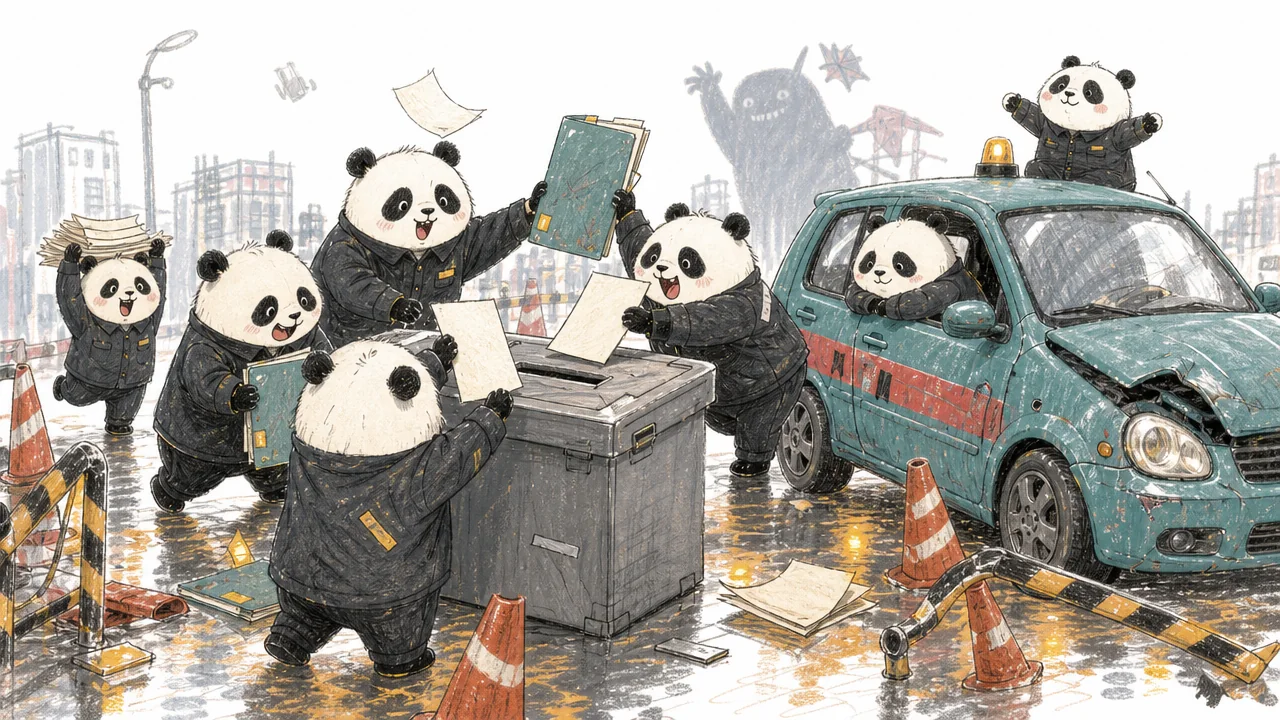
A popularity poll can be more than a measurement of affection. It can also be a game in which fans try to produce the most entertaining result. The car was an ideal choice for that kind of participation because voting for it made the poll itself feel more like Chainsaw Man.
Some Japanese-language posts described choosing the car after seeing it in the candidate list, or treating the ballot as an opportunity to vote for unusual options. These comments are small qualitative examples, not evidence of how all voters behaved. Still, they help explain why the car could attract attention beyond ordinary character preference.
The official organizers reinforced the possibility. The car appeared in multiple Japanese polls, and later poll pages continued to present it with a humorous, almost legendary status. The official presentation of the third poll calls back to its earlier “legend,” turning a fandom joke into part of the poll’s own history.
Tatsuki Fujimoto also commented on the car’s ranking in a way that framed it as an amusing reversal: a joke vote he had once made in another series’ popularity poll seemed to have come back to him. His reaction further supported the idea that this was not being treated as a conventional popularity result.
Japanese and English-speaking fans emphasize different parts of the same joke
In the Japanese material reviewed for this feature, the emphasis often falls on the strangeness of the candidate list and the shock of the car beating Kobeni. The result is treated as a memorable oddity: why is a car here, and how did it pass its owner?
English-language fandom often pushes the anthropomorphism further. Phrases such as “Kobeni’s car is best girl” and “best character” use the vocabulary of character fandom to elevate the vehicle above human cast members. Other jokes imagine it becoming the “Car Devil,” extending the poll gag into Chainsaw Man’s fictional terminology.
The car’s recognizable appearance also helps. English-language posts have treated sightings of the real-world model or similar fan content as a small fandom event, using reactions such as “Kobeni car is real!” Fans have also joked about standalone art, Lego versions, and car merchandise. These recurring motifs show that the vehicle became visually recognizable as a symbol, not that there is measured demand for official products.
There is a concrete difference in the published poll results. The car was seventh in the first Japanese poll, while it did not appear in VIZ’s English-language presentation of the 2020 top ten. In VIZ’s August 2022 results, however, it ranked fourth and Kobeni ranked fifth. The Japanese third poll, held in 2025, still placed the car at 19th, with Kobeni at 13th.
Those figures should not be turned into a simple national comparison. The voting formats, audiences, and timing were not necessarily identical, and voters’ motivations were not published. The available reaction evidence is also drawn largely from searchable articles, anonymous Japanese boards, Reddit, and meme documentation. It shows recurring patterns in those public samples—not the consensus of Japanese or overseas Chainsaw Man fans.
Why the car joke has lasted
The car works because several jokes overlap in one object. It is absurdly present in a character poll, connected to Kobeni’s suffering, credited with memorable action scenes, and attached to the unbeatable line that it once ranked above its owner.
That combination lets fans talk about the car as if it were a conventional character. They can debate its strength, mourn its destruction with an affectionate “RIP,” imagine its return, or invent a devil identity for it. Each joke is easy to understand and easy to repeat, even when detached from the original scene.
Its later rankings matter for the same reason. Fifteenth place in the second Japanese poll and 19th in the third do not prove that voters loved the car as a character in the same way they loved Kobeni. They do show that the car remained recognizable as a valid and entertaining object of fandom attention.
Ultimately, Kobeni’s car is less a beloved automobile than a shared symbol. It allows fans to recreate Chainsaw Man’s central comic tension: terrible things happen, the situation becomes increasingly irrational, and the correct response may be to put the car on the ballot.
Panda’s Note 🐼
If a character poll in your country included a car, food, or another non-character, would fans vote for it as a joke—or would the object become a genuine fandom favorite?
Does Kobeni’s car feel popular because of the vehicle itself, or because it represents Kobeni’s bad luck and Chainsaw Man’s absurd sense of humor?
Comments